Blog
What Is Myofascial Release? How It Helps with Chronic Pain and Sciatica
It All Begins Here
Myofascial release is a hands-on technique that uses gentle, sustained pressure to loosen tight or restricted fascia, the connective tissue surrounding muscles and nerves, which can contribute to chronic pain and sciatica-related tension. At Miss Still Massages, this approach is offered by a therapist who understands chronic pain firsthand, not just from training.
Chronic pain that doesn't respond to typical massage often has a specific reason: the problem isn't just the muscle, it's the fascia surrounding it. Myofascial release is built specifically to address this layer of tissue, and for people dealing with long-standing tension or sciatica-related discomfort, understanding how it works can explain why other approaches haven't fully helped.
What Is Fascia, and Why Does It Matter?
Fascia is the connective tissue that wraps around muscles, nerves, and organs throughout the body, holding everything in place while still allowing movement. When fascia becomes tight or restricted, whether from injury, repetitive strain, poor posture, or long-term stress, it can limit mobility and contribute to pain that doesn't stay neatly confined to one spot. Because fascia forms a connected network throughout the body, a restriction in one area can sometimes contribute to pain or tightness somewhere else entirely.
How Myofascial Release Works
Unlike deep tissue massage, which works to relax muscle fibers directly, myofascial release uses gentle, sustained pressure held over time to encourage restricted fascia to soften and release. The pressure is typically lighter than deep tissue work, but it's held much longer, sometimes for several minutes in one spot, rather than moving continuously. This slower, sustained approach is what allows the fascia itself, rather than just the muscle underneath it, to respond and loosen.
The Connection Between Myofascial Release and Sciatica
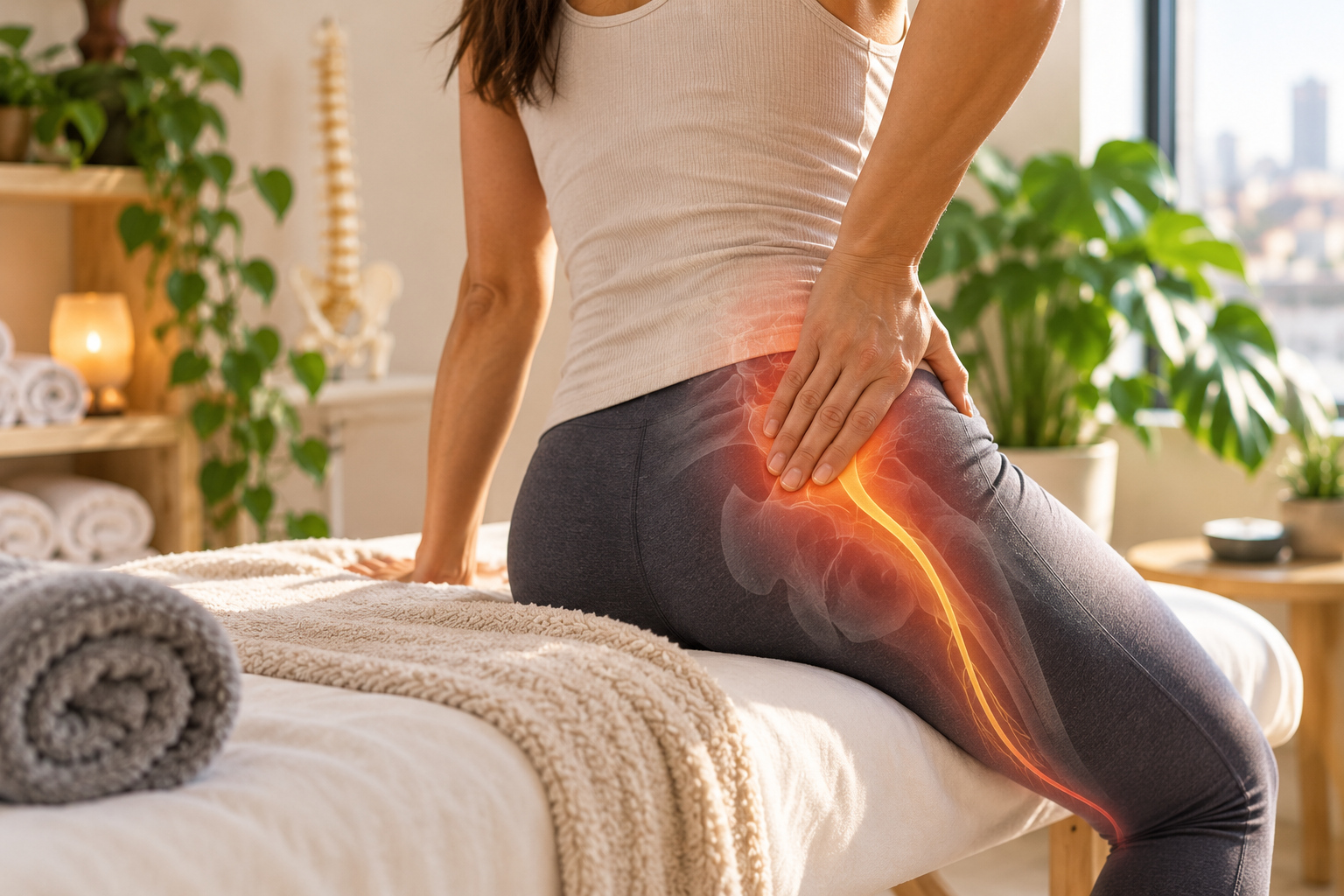
Sciatica refers to pain that radiates along the sciatic nerve, often starting in the lower back or hip and traveling down one leg. In some cases, tight or restricted fascia around the hip, lower back, or piriformis muscle can contribute to compression on the sciatic nerve, adding to the pain and tightness a person feels. Myofascial release aims to address this by softening the fascia in the surrounding area, which may help ease some of the tension contributing to sciatic discomfort.
It's important to be realistic about what this can and can't do. Sciatica can have several different underlying causes, some of which, like a herniated disc, require medical evaluation and treatment beyond what massage therapy can address. Myofascial release is best understood as a tool that may help manage fascia-related tension contributing to sciatic symptoms, not a guaranteed fix for every cause of sciatica. Most people who respond to this approach notice changes gradually, often over four to six sessions rather than immediately.
A Personal Perspective on Chronic Pain
Miss Still Massages was founded by Melanie Still, who developed chronic sciatica years before becoming a massage therapist herself. That experience, of living with pain that didn't have a simple fix, shapes how sessions are approached today: with patience, careful listening to how your body responds, and an understanding that chronic pain rarely follows a straightforward pattern. Melanie is a graduate of The San Francisco School of Massage and Bodywork and continues studying Ortho-Bionomy, an approach that shares myofascial release's focus on gentle, body-responsive technique rather than force.
What a Typical Course of Treatment Looks Like
Because myofascial release works gradually, a single session is rarely the full picture. Many clients start with sessions spaced roughly one to two weeks apart, allowing the fascia time to respond between visits. As tightness decreases, sessions are often spaced further apart, shifting from active treatment to occasional maintenance. Tracking how your body responds, including which movements or activities feel different afterward, helps determine the right pace going forward rather than following a fixed schedule for everyone.
Combining Myofascial Release With Other Techniques
Myofascial release is often paired with other approaches rather than used entirely on its own. A session might begin with lighter Swedish or deep tissue work to help the surrounding muscles relax, followed by sustained myofascial pressure on the specific areas of restriction. For clients dealing with both muscle tension and fascia restriction, this combined approach tends to address more of what's contributing to the pain than either technique alone.
Who Benefits From Myofascial Release
This approach tends to help people dealing with:
Chronic, longstanding pain that hasn't fully responded to standard massage
Sciatica-related tightness in the hip, lower back, or leg
Restricted mobility that seems tied to tension rather than injury
Tension that seems to show up in a wide, connected area rather than one isolated spot
A history of previous injury that left lingering stiffness behind
What to Expect During a Session
A myofascial release session typically moves more slowly than a standard massage, with your therapist holding gentle pressure in one area for an extended period before moving to the next. It's normal for this to feel different from more familiar massage styles, less like kneading and more like sustained, patient pressure. Choose from 60 or 90-minute sessions, either at the Mission District studio or through an in-home visit if you're located elsewhere in San Francisco or in Daly City.
If you're dealing with chronic pain or sciatica-related tension that hasn't responded to other approaches, contact Miss Still Massages to talk through whether myofascial release makes sense for your situation.
Frequently Asked Questions
Q: What does myofascial release feel like compared to regular massage?
A: It feels slower and more sustained than a typical massage. Instead of continuous strokes, your therapist holds gentle pressure in one spot for an extended period, allowing the fascia to gradually soften.
Q: Can myofascial release cure sciatica?
A: Not necessarily. Myofascial release may help ease fascia-related tension contributing to sciatic symptoms, but sciatica can have several underlying causes, some of which require medical evaluation beyond what massage therapy can address.
Q: How many sessions does myofascial release typically take to show results?
A: Many people notice gradual changes over four to six sessions, though this varies depending on how long the restriction has been present and its underlying cause.
Q: Is myofascial release painful?
A: It's generally gentler than deep tissue massage, though holding sustained pressure in a tight area can feel uncomfortable at first. It shouldn't be sharply painful, and pressure can be adjusted based on your comfort.
Q: What is fascia, exactly?
A: Fascia is the connective tissue that surrounds muscles, nerves, and organs throughout the body. When it becomes tight or restricted, it can limit mobility and contribute to pain.
Q: Should I see a doctor for sciatica instead of getting a massage?
A: If sciatica is new, severe, or accompanied by numbness, weakness, or loss of bladder or bowel control, seek medical evaluation right away. For ongoing, milder sciatic tension, myofascial release can be a helpful complement to medical care, not a replacement for it.
Q: How is myofascial release different from deep tissue massage?
A: Deep tissue massage works directly on muscle fibers with firmer, more active pressure. Myofascial release targets the connective tissue around muscles using lighter, sustained pressure held for a longer period of time.
Q: How often should I schedule myofascial release sessions?
A: Many clients start with sessions one to two weeks apart, then space them out further as tightness decreases and shift toward occasional maintenance visits.
Q: Can myofascial release be combined with other massage techniques?
A: Yes. It's often paired with Swedish or deep tissue work in the same session, using lighter techniques to relax surrounding muscles before focusing sustained pressure on areas of fascia restriction.
Q: Is myofascial release safe if I'm not sure what's causing my pain?
A: A conversation about your symptoms and history before the session helps determine whether myofascial release is appropriate, and if your symptoms suggest something requiring medical evaluation, that will be discussed before proceeding.
Sports Massage: When to Book It and What to Expect Before or After a Workout
It All Begins Here
Sports massage timed before a workout should be light, brief, and focused on warming up muscles, while sports massage after a workout can go deeper and longer to reduce soreness and speed recovery. At Miss Still Massages, sessions are timed and tailored around your training schedule and goals for the best results.
Timing matters more than most people realize with sports massage. The same technique applied before a workout versus after one can produce very different results, and knowing which approach fits your situation helps you get real value out of the session rather than just relaxing muscles that were about to be put to work anyway.
Sports Massage Before a Workout
Pre-workout massage works best when it's light, dynamic, and brief, more of a warm-up than a deep treatment. The goal is to increase blood flow and improve flexibility without fatiguing the muscles you're about to use. A short, lighter session can help loosen tight areas before activity, but heavy, deep pressure right before a workout can actually leave muscles feeling fatigued or temporarily weaker, which works against you rather than for you.
Sports Massage After a Workout
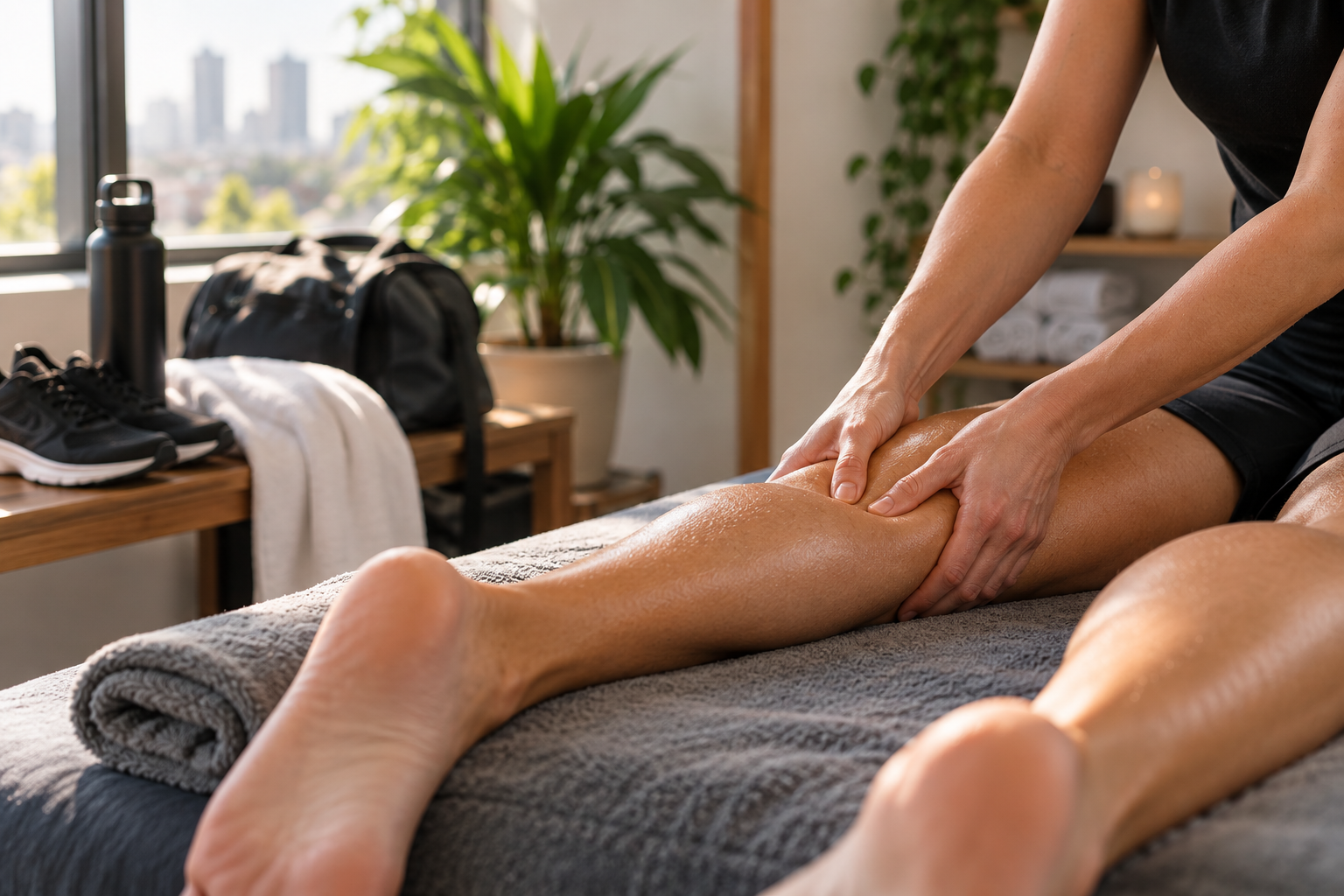
Post-workout massage is where deeper, longer sessions make the most sense. After activity, muscles are dealing with metabolic byproducts and microscopic tissue stress that contribute to delayed onset muscle soreness, commonly known as DOMS. A deeper, 60 to 90-minute session after a workout is more effective for easing this soreness, supporting recovery, and helping muscles feel ready for the next training session sooner.
Which Timing Is Better Overall?
For most people, post-workout massage offers the more substantial, well-supported benefits: reduced next-day soreness, better relaxation, and faster recovery between training sessions. Pre-workout massage can offer a modest warm-up effect, but the evidence is more mixed, and there's a real risk of leaving muscles feeling less powerful right when you need them most. If you can only fit in one session around a workout, after tends to be the more valuable choice for most goals.
What to Tell Your Therapist Before Booking
A quick conversation before your session helps determine the right timing and pressure. It's worth mentioning whether you're booking before or after activity, what sport or training you're doing, any specific muscle groups feeling tight or overworked, and whether you have an upcoming event, like a race or competition, that the session should be timed around. This context changes whether the session should stay light and brief or go deeper and longer.
Signs You'd Benefit From Sports Massage
Sports massage isn't just for competitive athletes. It's a good fit if you experience:
Recurring soreness that lingers longer than a day or two after exercise
Tightness in specific muscle groups tied to your sport or training routine
Reduced range of motion that seems to be limiting performance
A desire to recover faster between regular training sessions
General muscle fatigue from an active lifestyle, even without formal training
How Sports Massage Differs From Deep Tissue Massage
Sports massage and deep tissue massage share some technique overlap, but sports massage is specifically oriented around athletic performance and recovery, often incorporating stretching and techniques focused on the muscle groups most used in a particular activity. Deep tissue massage is broader and not necessarily tied to an activity or training schedule. Many active clients benefit from both, depending on the timing and goal of a given session.
Timing Examples by Activity
How you time sports massage can vary depending on what you train for:
Running: A light pre-run session the day before a long run or race can help with flexibility, while a deeper post-run massage a day or two afterward supports recovery from the accumulated impact.
Weightlifting or strength training: Post-workout sessions focused on the specific muscle groups trained that week tend to be more useful than pre-workout massage, since heavy lifting benefits from muscles that haven't been pre-fatigued.
Cycling: Recovery-focused sessions targeting the legs and hips after long rides can help with the tightness that builds up from repetitive pedaling.
General fitness or recreational activity: A regular session every one to two weeks, timed after your more intense workouts, tends to support ongoing recovery without needing to plan around every individual session.
Building Sports Massage Into a Training Routine
For clients training consistently, sports massage works best as a planned part of the routine rather than something booked only after an injury or flare-up. Scheduling sessions around your heavier training days, rather than randomly, helps target the muscle groups under the most strain before minor tightness becomes a bigger problem. Melanie's approach, shaped by her own background in bodywork and hands-on training at The San Francisco School of Massage and Bodywork, focuses on adjusting each session to your current training load rather than repeating the same routine regardless of what your week has looked like.
What to Expect During Your Session
At Miss Still Massages, sports massage sessions start with a conversation about your training schedule, the specific muscle groups you're concerned about, and whether you're booking before or after activity, since that timing changes how the session is approached. Sessions are available at the Mission District studio in San Francisco or as an in-home visit for clients throughout the city and in Daly City, which can be especially convenient scheduled right after a workout when you'd rather not travel far.
If you're training regularly and want to build sports massage into your recovery routine, contact Miss Still Massages to talk through timing and frequency for your specific activity level.
Frequently Asked Questions
Q: Is it better to get a massage before or after a workout?
A: For most people, after a workout offers more substantial benefits, including reduced soreness and faster recovery. Before a workout, only light, brief massage is recommended to avoid fatiguing muscles.
Q: How soon after a workout should I get a massage?
A: There's no strict rule, but many people schedule sports massage anywhere from a few hours to a day or two after a workout, once acute muscle stress has settled but before soreness peaks.
Q: Can massage help with delayed onset muscle soreness (DOMS)?
A: Yes. Post-workout massage is commonly used to help ease DOMS by supporting circulation and reducing muscle tension in the areas most affected by recent activity.
Q: Is sports massage only for athletes?
A: No. Sports massage benefits anyone with an active lifestyle, including recreational exercisers dealing with recurring soreness, tightness, or reduced range of motion, not just competitive athletes.
Q: Should sports massage be deep or light pressure?
A: It depends on timing. Before a workout, lighter, shorter sessions are recommended. After a workout, deeper, longer sessions tend to be more effective for recovery.
Q: How often should I get a sports massage if I train regularly?
A: This varies by individual and training intensity, but many active clients find that a session every one to two weeks supports ongoing recovery without overdoing it.
Q: Should runners get a massage before or after a race?
A: A light session the day before a race can support flexibility without fatiguing the legs, while a deeper recovery massage a day or two after the race helps address the impact and soreness from running.
Q: Can sports massage help prevent injury, not just treat soreness?
A: Regular sports massage can help identify and address tightness before it becomes a bigger problem, which may reduce injury risk over time, though it isn't a guarantee against injury.
What Is Trigger Point Massage and Who Is It For?
It All Begins Here
Trigger point massage applies focused, direct pressure to specific tight knots in muscle tissue, known as trigger points, that can cause pain in the immediate area or refer pain elsewhere in the body. At Miss Still Massages, trigger point work is used to target these specific spots rather than treating the whole body evenly, making it especially useful for recurring, localized pain patterns.
If you've ever felt a small, tender knot in your shoulder or upper back that seems to cause pain somewhere else entirely, like a headache or a tight sensation down your arm, you may have experienced what's known as a trigger point. Trigger point massage is built specifically to find and release these spots, and understanding how it works can help you decide if it's the right approach for what you're dealing with.
What Exactly Is a Trigger Point?
A trigger point is a small area within a muscle that stays contracted and tender, often described as a "knot." What makes trigger points different from general muscle tightness is referred pain: pressing on a trigger point in one location can cause a sensation of pain, tingling, or tightness somewhere else in the body entirely. A trigger point in the shoulder, for example, can contribute to tension headaches, even though the headache itself isn't the actual source of the problem.
How Trigger Point Massage Works
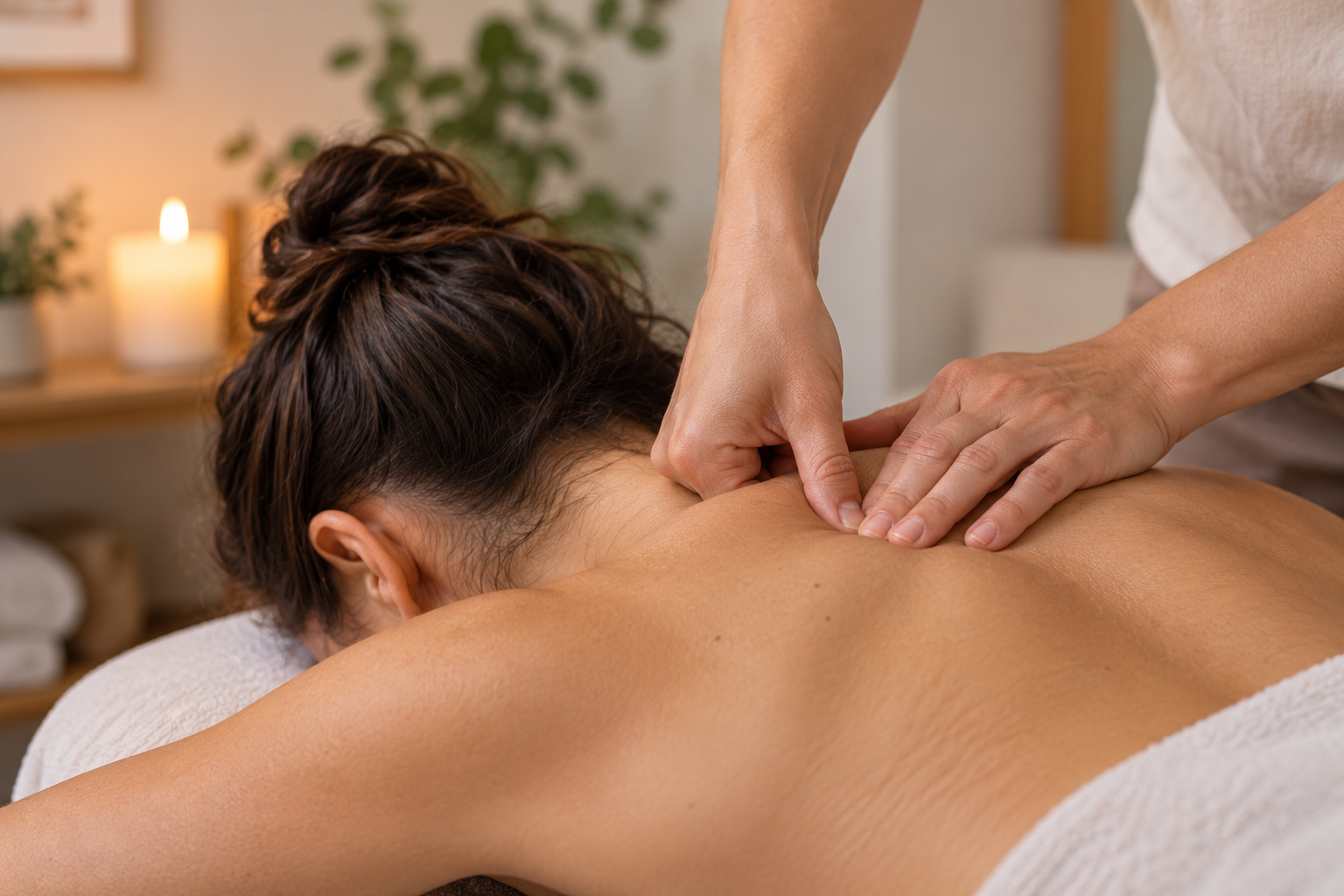
Trigger point massage uses focused, direct pressure applied to a specific knot, typically held for a period of time rather than moved continuously like Swedish massage strokes. The goal is to encourage the tight muscle fibers to release, which can reduce both the localized tenderness and any pain the trigger point was referring elsewhere. Sessions often involve a combination of sustained pressure, brief release, and gentle stretching around the treated area.
What Causes Trigger Points to Form
Trigger points don't appear randomly. They tend to develop from repetitive movement patterns, sustained poor posture, muscle overuse, stress that shows up as physical tension, or an old injury that never fully resolved. Someone who spends long hours at a desk, for example, often develops trigger points in the upper trapezius and between the shoulder blades from the sustained forward-head posture that comes with screen work. Understanding what's driving the pattern, not just treating the knot itself, is part of what makes trigger point work more effective over time.
How Trigger Point Massage Differs From Deep Tissue Massage
While the two are related and often combined in the same session, they aren't the same thing. Deep tissue massage works broadly across larger muscle groups to relieve general chronic tension throughout the body. Trigger point massage is more targeted, focusing specifically on individual knots rather than treating an entire muscle group evenly. Many sessions use both: broader deep tissue work to warm up and relax the surrounding area, followed by focused trigger point pressure on the specific spots causing trouble. You can read more about how these two approaches compare in our guide to Swedish massage vs. deep tissue massage.
Who Benefits Most From Trigger Point Massage
Trigger point massage tends to help people dealing with:
Recurring tension headaches linked to neck and shoulder tightness
Localized, persistent knots that don't resolve with general massage
Pain that seems to show up in one area but may originate somewhere else
Tightness related to repetitive movement, posture, or desk work
Muscle tension that returns to the same specific spots repeatedly
If your pain is more generalized, spread across a large area rather than concentrated in specific spots, deep tissue or Swedish massage may be a better starting point, with trigger point work added in as needed.
Common Trigger Point Locations and What They're Linked To
Certain areas tend to develop trigger points more often than others, and each is associated with its own pattern of referred discomfort:
Upper trapezius (top of the shoulders): frequently linked to tension headaches and neck stiffness
Between the shoulder blades: often tied to poor posture from desk work or driving, and can refer pain toward the shoulder or upper arm
Hip and glute muscles: trigger points here can mimic sciatica-like symptoms, sending discomfort down the leg
Forearms: common in people who type frequently or perform repetitive hand motions, sometimes contributing to wrist or elbow discomfort
Recognizing these patterns helps explain why pain in one area doesn't always mean the problem originates there.
Supporting Your Results Between Sessions
Trigger point release tends to last longer when a few simple habits are added between appointments. Gentle stretching of the treated area, applying heat to ease residual tightness, staying hydrated, and paying attention to posture during long periods of sitting or repetitive movement can all help prevent the same trigger points from redeveloping quickly. None of this replaces the massage itself, but it can extend how long the relief lasts.
What to Expect During a Session
Trigger point work can feel intense in the exact spot being treated, sometimes described as a "good hurt," but it shouldn't be unbearable. Communicating your comfort level throughout the session allows your therapist to adjust pressure and timing. Many clients notice some relief immediately, while a full release of a long-standing trigger point may take more than one session to fully resolve.
At Miss Still Massages, trigger point techniques are typically worked into a broader 60 or 90-minute session rather than offered as a stand-alone service, since combining it with lighter surrounding work tends to produce better, longer-lasting results. The Mission District studio is available for these sessions, and clients who'd rather stay home can request an in-home visit anywhere in San Francisco or Daly City instead.
If you're dealing with a stubborn knot or recurring tension that hasn't responded to general massage, contact Miss Still Massages to talk through whether trigger point work is the right fit for your situation.
Frequently Asked Questions
Q: What does a trigger point feel like?
A: A trigger point typically feels like a small, tender, rope-like knot within a muscle. Pressing on it can reproduce pain in the immediate area or cause a referred sensation somewhere else in the body.
Q: How is trigger point massage different from a regular massage?
A: Regular massage, like Swedish massage, moves continuously across the body with lighter pressure. Trigger point massage applies sustained, focused pressure to specific knots rather than treating the whole body evenly.
Q: Can trigger points cause headaches?
A: Yes. Trigger points in the neck, shoulders, or upper back are a common contributor to tension headaches, even though the headache itself shows up in a different location than the actual trigger point.
Q: Does trigger point massage hurt?
A: It can feel intense in the specific area being treated, sometimes described as a "good hurt," but it shouldn't be unbearable. Your therapist adjusts pressure based on your feedback throughout the session.
Q: How many sessions does it take to release a trigger point?
A: Some relief is often noticeable after one session, but long-standing trigger points may take a few sessions to fully resolve, especially if the underlying cause, like posture or repetitive movement, hasn't changed.
Q: Can trigger point massage be combined with deep tissue massage?
A: Yes. Many sessions combine broader deep tissue work with focused trigger point pressure on specific knots, which tends to produce more complete and longer-lasting relief than either technique alone.
Q: Can a trigger point in my hip cause pain that feels like sciatica?
A: Yes. Trigger points in the hip and glute muscles can refer pain down the leg in a pattern that feels similar to sciatica, even when the sciatic nerve itself isn't directly involved.
Q: What can I do between sessions to help trigger points stay released?
A: Gentle stretching, applying heat, staying hydrated, and being mindful of posture during repetitive activities like sitting or typing can all help extend the relief from a trigger point session.
Q: What usually causes trigger points to develop in the first place?
A: Repetitive movement, sustained poor posture, muscle overuse, stress-related tension, and old injuries that never fully resolved are common contributors to trigger point formation.
Swedish Massage vs. Deep Tissue Massage: How to Choose the Right Session
It All Begins Here
Swedish massage uses lighter, flowing strokes to promote relaxation and circulation, while deep tissue massage uses firmer, more sustained pressure to reach deeper muscle layers and release chronic tension. At Miss Still Massages, both techniques are customized to your body's needs, so the right choice depends on whether you're looking to unwind or work out a specific problem area.
If you've never booked a massage before, or you're deciding between two familiar names, "Swedish" and "deep tissue" are the two most requested styles for good reason: they solve different problems. Understanding what each one actually does makes it much easier to book the session that matches what your body needs right now.
What Makes Swedish Massage Different
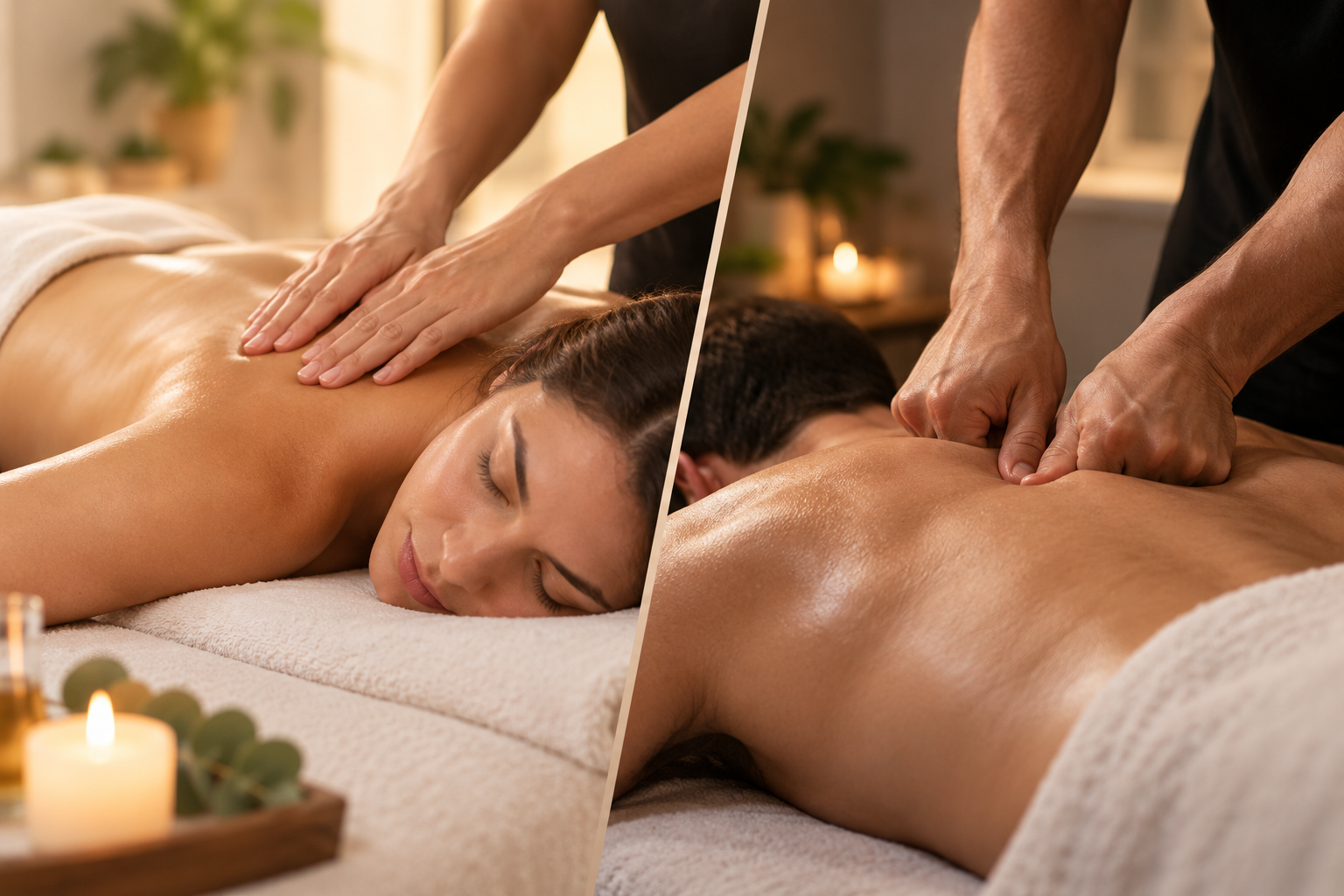
Swedish massage uses long, gliding strokes, kneading, and light-to-medium pressure to relax the nervous system and improve circulation. It's the style most people picture when they think of a classic massage: smooth, rhythmic, and calming rather than intense. Swedish massage is a strong choice when the goal is general stress relief, better sleep, or simply unwinding after a demanding week, rather than working through a specific area of chronic tightness.
What Makes Deep Tissue Massage Different
Deep tissue massage applies firmer, more sustained pressure to reach the deeper layers of muscle and connective tissue. Instead of gliding quickly across the surface, the therapist works slowly into areas of chronic tension, often focusing on specific muscle groups rather than the whole body evenly. Deep tissue massage tends to be the better fit for people managing ongoing stiffness, postural tension from sitting or driving, or muscle tightness that hasn't responded to lighter touch.
Comparing the Two at a Glance
Pressure: Swedish massage uses light-to-medium pressure; deep tissue uses firm, sustained pressure
Pace: Swedish massage flows continuously across the body; deep tissue moves more slowly and deliberately through specific areas
Best for: Swedish massage suits relaxation, stress relief, and first-time clients; deep tissue suits chronic tension, tightness, and targeted problem areas
Sensation: Swedish massage should feel soothing throughout; deep tissue can feel intense in tight areas but shouldn't be painful
Aftereffects: Swedish massage typically leaves you feeling relaxed and loose; deep tissue can leave some mild soreness for a day, similar to a workout
How to Decide Which One You Need
A simple way to think about it: if you're mainly looking to de-stress, sleep better, or treat yourself to something calming, Swedish massage is usually the better starting point. If you're dealing with a specific area of chronic tightness, recurring tension headaches from your neck and shoulders, or muscle soreness that lingers, deep tissue massage is more likely to address the underlying tightness rather than just relaxing you temporarily.
It's also common to combine both approaches in a single session. At Miss Still Massages, sessions are built around a conversation about your body's history and current needs rather than a fixed protocol, so a session can blend Swedish, deep tissue, and other techniques like trigger point work depending on what comes up during your visit.
A Body-Responsive Approach, Not a Fixed Routine
Miss Still Massages is run by Melanie Still, a graduate of The San Francisco School of Massage and Bodywork who also studies Ortho-Bionomy, an approach centered on working with the body's natural responses rather than forcing a result. That training shapes how Swedish and deep tissue techniques are applied here: instead of running through a standardized sequence regardless of who's on the table, each session adjusts pressure, pacing, and focus based on how your body responds in real time. For clients managing chronic tightness or old injuries, that responsiveness often matters as much as the specific technique being used.
Session Options and Pricing
Both Swedish and deep tissue sessions are available in multiple lengths to fit different needs and schedules:
Studio sessions: 30 minutes ($60), 60 minutes ($125), 90 minutes ($145), or 120 minutes ($170)
In-home sessions: 30 minutes ($75), 60 minutes ($135), 90 minutes ($155), or 120 minutes ($175)
Triple Modality Treat: a 60-minute session for $140 that combines three techniques in one visit, useful if you want elements of both Swedish and deep tissue work along with something like trigger point therapy
A 60-minute session is typically enough time to address one or two focus areas alongside general relaxation, while 90 minutes allows for more complete, whole-body work.
What to Expect During Your Session
Sessions run 60 or 90 minutes and can take place at the Mission District studio or wherever is easiest for you, since in-home visits are offered throughout San Francisco and in Daly City. Before your session starts, expect a short conversation about problem areas, pressure preferences, and any medical considerations, since first-time clients benefit most when the therapist understands their body's specific history rather than applying a standardized routine.
Is It Normal to Feel Sore Afterward?
Mild soreness after a deep tissue session, especially in areas that were particularly tight, is common and usually fades within a day or two, similar to how muscles feel after a good workout. Swedish massage rarely causes this kind of soreness since the pressure stays lighter throughout. Drinking water and light stretching after either type of session can help your muscles recover comfortably.
If you're still not sure which style is right for your situation, reach out to Miss Still Massages before booking. A quick conversation about what you're feeling and what you're hoping to get out of the session is the fastest way to land on the right choice.
Frequently Asked Questions
Q: Is deep tissue massage more painful than Swedish massage?
A: Deep tissue massage involves firmer pressure and can feel intense in areas of chronic tightness, but it shouldn't be sharply painful. Communicating your comfort level during the session lets the therapist adjust pressure as needed.
Q: Can Swedish and deep tissue techniques be combined in one session?
A: Yes. Many sessions blend both approaches, using lighter Swedish strokes to warm up the muscles before working more deeply into specific tight areas, tailored to what your body needs that day.
Q: Which is better for stress relief, Swedish or deep tissue massage?
A: Swedish massage is generally the better choice for pure stress relief and relaxation, since its lighter, flowing strokes are designed to calm the nervous system rather than target specific muscle tension.
Q: Which is better for chronic back or neck pain?
A: Deep tissue massage is typically more effective for chronic back or neck tension, since it reaches deeper muscle layers where long-term tightness tends to build up.
Q: How long should a first massage session be?
A: A 60-minute session is a good starting point for most first-time clients, giving enough time to address problem areas without feeling rushed. Longer 90-minute sessions allow more time for both relaxation and targeted work.
Q: Will I be sore the next day after a deep tissue massage?
A: Mild, temporary soreness is common after deep tissue work on tight areas, similar to post-workout soreness, and typically resolves within a day or two.
Q: Is Swedish or deep tissue massage better for a first-time client?
A: Swedish massage is often recommended for first-time clients since it introduces you to massage therapy without intense pressure, though your therapist can adjust the approach based on what you're comfortable with.
Q: What is the Triple Modality Treat?
A: It's a 60-minute session priced at $140 that combines three techniques, such as Swedish, deep tissue, and trigger point work, in a single visit for clients who want more than one approach addressed at once.
Q: Do you offer in-home massage in San Francisco and Daly City?
A: Yes. In-home Swedish and deep tissue sessions are available for clients throughout San Francisco and in Daly City, in addition to studio sessions at the Mission District location.
Q: What should I tell my therapist before a Swedish or deep tissue session?
A: Mention any problem areas, past injuries, pressure preferences, and what you're hoping to get out of the session, whether that's relaxation or targeted relief, so the session can be tailored to your body rather than following a generic routine.
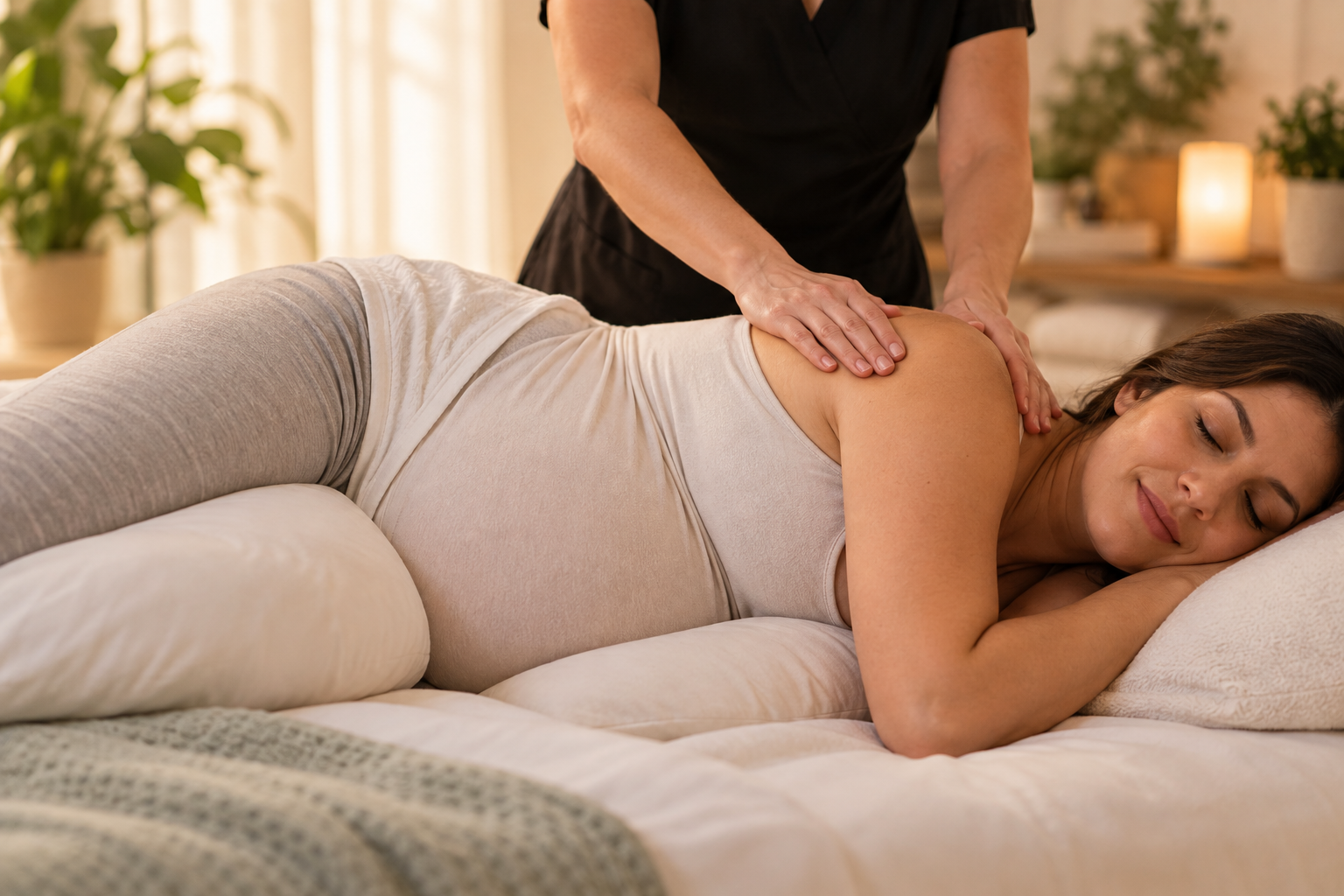
Is Prenatal Massage Safe? What to Expect at Every Trimester
It All Begins Here
Prenatal massage is generally considered safe after the first trimester, once the highest-risk period of early pregnancy has passed, and it's typically avoided or approached with extra caution before then. At Miss Still Massages, sessions are adapted to your trimester with careful positioning and lighter pressure, always with your healthcare provider's guidance in mind.
Pregnancy brings a long list of new questions, and whether massage is safe is one of the most common. The honest answer is that timing and technique both matter. Prenatal massage can offer real relief from the aches of pregnancy, but it needs to be approached differently than a typical massage, and that approach should change as your pregnancy progresses.
Why the First Trimester Is Different
Most massage therapists, including those trained in prenatal work, recommend waiting until after the first trimester to begin massage therapy. This is because miscarriage risk is highest during the first twelve weeks, and while there's no direct evidence that massage causes miscarriage, the standard, cautious approach in the field is to hold off until that early window has passed. If you're in your first trimester and eager to start, it's worth discussing timing with both your OB-GYN or midwife and your massage therapist before booking.
How Positioning Changes as Pregnancy Progresses
Once it's appropriate to begin, prenatal massage looks different from a typical session in one major way: positioning. Lying flat on your stomach isn't possible as your pregnancy advances, and lying flat on your back for extended periods is generally avoided in later pregnancy as well. Instead, prenatal sessions use side-lying positioning, supported by pregnancy-specific pillows and bolsters that keep your body properly aligned and comfortable throughout the session.
Pressure and Technique Adjustments
Prenatal massage uses lighter to medium pressure rather than the firm, sustained pressure used in deep tissue work. This isn't just about comfort; deep pressure during pregnancy carries some real considerations, including the possibility of affecting blood flow in ways that aren't appropriate during pregnancy. A qualified prenatal massage session should never involve intense, deep-tissue-style pressure, regardless of how much muscle tension you're carrying.
When to Get Medical Clearance First
Certain pregnancy conditions call for a conversation with your healthcare provider before scheduling any massage, including:
A history of blood clots or clotting disorders
Gestational diabetes
High blood pressure or preeclampsia
Any pregnancy complication your provider has flagged as high-risk
If none of these apply to you and you're past the first trimester, prenatal massage is generally considered a safe, supportive part of pregnancy care, but checking in with your provider first is always a reasonable step, especially for a first pregnancy massage.
What Prenatal Massage Can Help With
Many of the aches that come with pregnancy respond well to massage, including low back pain, hip and pelvic tension, leg cramping, and the general fatigue that comes with carrying extra weight differently as your body changes. Beyond the physical relief, many clients find prenatal massage helps with stress and anxiety during a time that can otherwise feel overwhelming.
How Discomforts Change Trimester by Trimester
The aches pregnancy brings tend to shift as it progresses, and sessions are adjusted accordingly:
Second trimester: As weight gain begins in earnest, low back tension and early hip discomfort are common. Sessions at this stage often focus on the lower back, hips, and legs while your body adjusts to its new center of gravity.
Third trimester: Swelling in the legs and feet, deeper hip and pelvic pressure, and general fatigue tend to increase. Side-lying positioning becomes especially important here, and sessions may spend more time on the legs and lower body to support circulation.
Throughout: Upper back and shoulder tension is common at any stage, often tied to changing posture as the body carries weight differently over time.
Postpartum Massage: A Natural Next Step
Many clients continue with massage after delivery, once cleared by their healthcare provider, since the physical demands of recovery and caring for a newborn bring their own tension, particularly in the neck, shoulders, and lower back. Postpartum sessions typically return to standard positioning and pressure once you've been cleared, but timing that transition with your provider's guidance is worth discussing during your last few prenatal visits.
Preparing for Your First Prenatal Session
A few things make a first prenatal massage go smoothly. Let your therapist know your current week of pregnancy, any complications your provider has flagged, and where you're feeling the most discomfort before the session starts. Wearing comfortable clothing you can move in easily, and eating a light meal beforehand rather than arriving on an empty stomach, can also help you feel more comfortable throughout the appointment.
What to Expect During Your Session
At Miss Still Massages, prenatal sessions begin with a conversation about your trimester, any complications your provider has noted, and where you're feeling the most tension. From there, the session is built around side-lying positioning with supportive props, using pressure that stays well within safe limits for pregnancy. Sessions are available at the San Francisco studio or as an in-home visit for clients who prefer not to travel while pregnant, including those in Daly City.
If you're pregnant and dealing with back pain, hip tension, or general pregnancy fatigue, contact Miss Still Massages to talk through timing and what a session would look like for your specific stage of pregnancy.
Frequently Asked Questions
Q: Can I get a massage during my first trimester?
A: Most massage therapists recommend waiting until after the first trimester due to higher miscarriage risk during that period. Talk with your healthcare provider and your massage therapist before scheduling if you're still in your first twelve weeks.
Q: What position do you lie in for a prenatal massage?
A: Side-lying positioning with supportive pillows and bolsters is standard for prenatal massage, since lying flat on your stomach or back for extended periods isn't recommended as pregnancy progresses.
Q: Is deep tissue massage safe during pregnancy?
A: No. Prenatal massage uses light to medium pressure rather than the firm, sustained pressure used in deep tissue work, since deep pressure isn't considered appropriate during pregnancy.
Q: Do I need my doctor's approval before getting a prenatal massage?
A: If you have a history of blood clots, gestational diabetes, high blood pressure, or another flagged pregnancy complication, checking with your provider first is important. Otherwise, prenatal massage after the first trimester is generally considered safe.
Q: What can prenatal massage help with?
A: Common benefits include relief from low back and hip pain, leg cramping, pregnancy-related fatigue, and stress or anxiety related to the physical and emotional changes of pregnancy.
Q: Can I get a prenatal massage at home instead of a studio?
A: Yes. In-home prenatal sessions are available for clients throughout San Francisco and in Daly City for those who prefer not to travel while pregnant.
Q: How is prenatal massage different from a regular massage?
A: Prenatal massage uses pregnancy-specific positioning, lighter pressure, and supportive props, and it's tailored around what's safe and comfortable at your current stage of pregnancy rather than a standard full-body routine.
Q: What should I bring or do before my first prenatal massage?
A: Wear comfortable clothing, eat a light meal beforehand, and be ready to share your current week of pregnancy and any complications your provider has noted so your session can be adjusted appropriately.
Q: Does prenatal massage help with swelling in the third trimester?
A: Many clients find that prenatal massage, with its focus on gentle circulation support in the legs and feet, helps ease the swelling and heaviness that often increase in the third trimester.